Context & Motivation
Trauma victims and individuals capable of dissociation often lose "interoception"—the ability to sense their own internal bodily states. While 17.3% of US adults practice meditation, survivors of PTSD face barriers engaging with traditional breath-focused techniques.
Driven by Dr. Negar Fani's research at Emory University, breathSense utilizes external mechanoreceptor stimulation to anchor the user. Dr. Fani's lab found that vibration synchronized to the exhale significantly improves outcomes in grounding therapy compared to vibration alone.
Project Objectives
- Latency: Achieve a vibration response delay of < 250ms (human reaction time threshold) to ensure causal linkage for the user.
- Haptic Strength: Deliver a vibration intensity of > 0.8 Grms to be perceptible through clothing and tissue.
- Usability: Design for the 5th percentile female to 95th percentile male, with a "donning time" of under 1 minute for unassisted Setup.
System Architecture
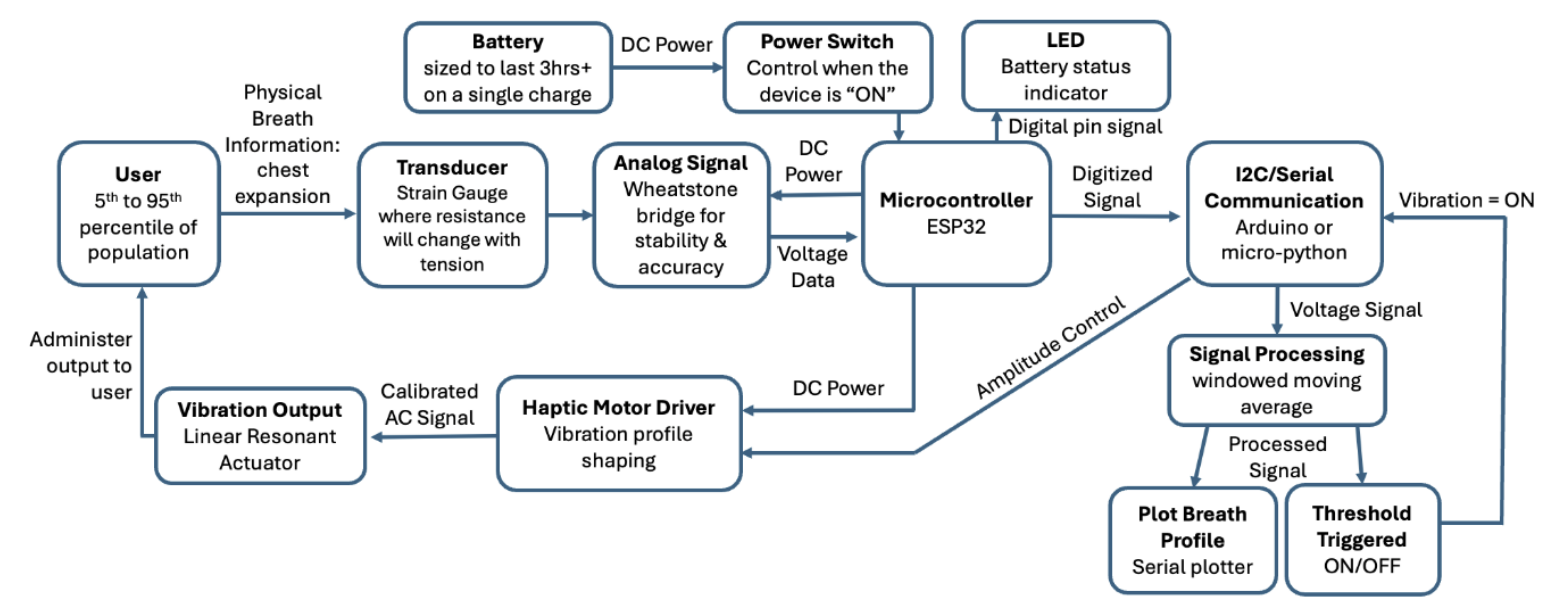
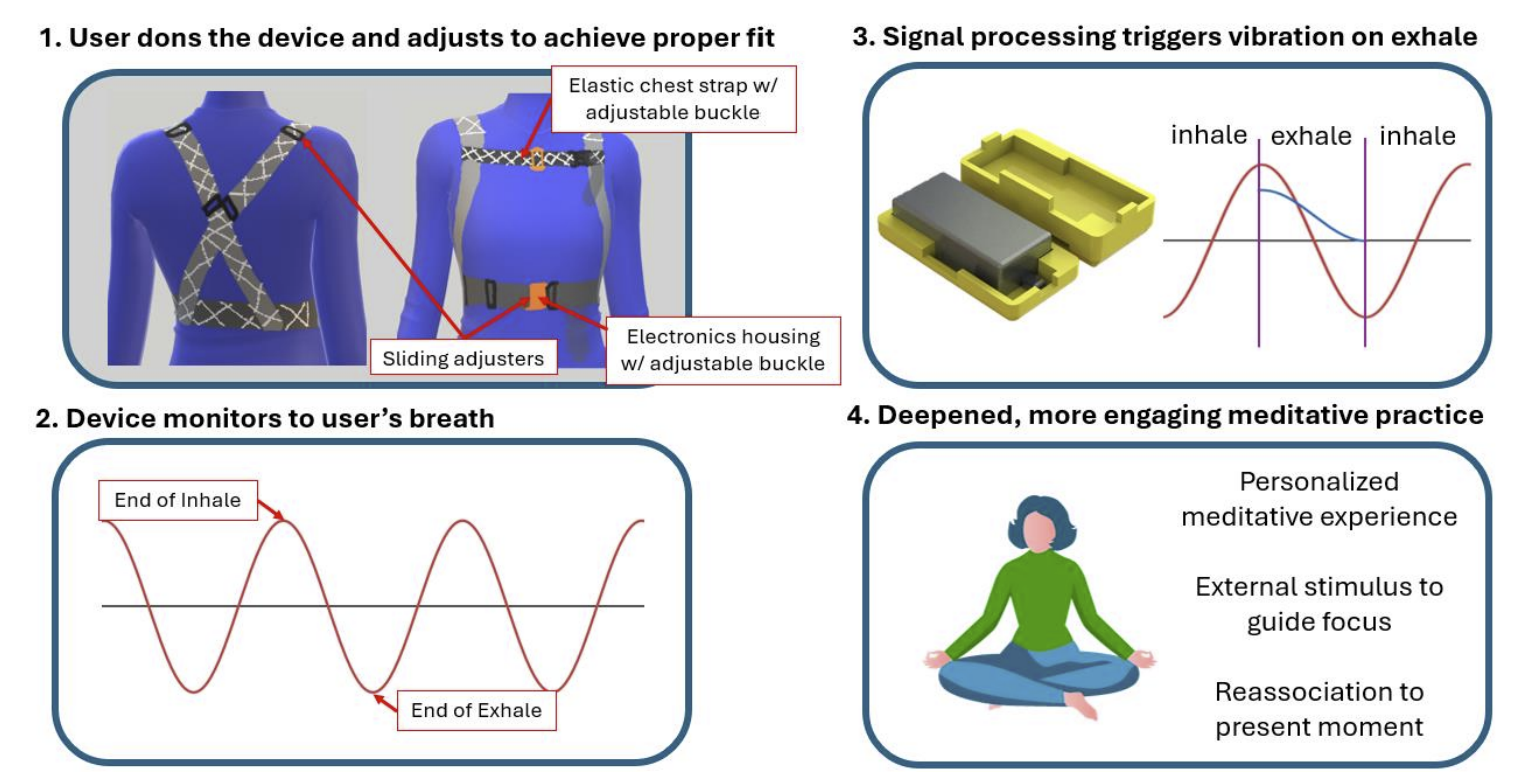
The solution integrates a wearable "Racerback" vest with a modular electronics core. The system follows a localized processing loop:
[Chest Expansion] -> [Strain Gauge] -> [Wheatstone Bridge] -> [NAU7802 24-bit ADC] -> [ESP32 S3] -> [DRV2605 Driver] -> [LRA Haptic Motor]
Engineering Implementation
Concept & Form Factor Selection
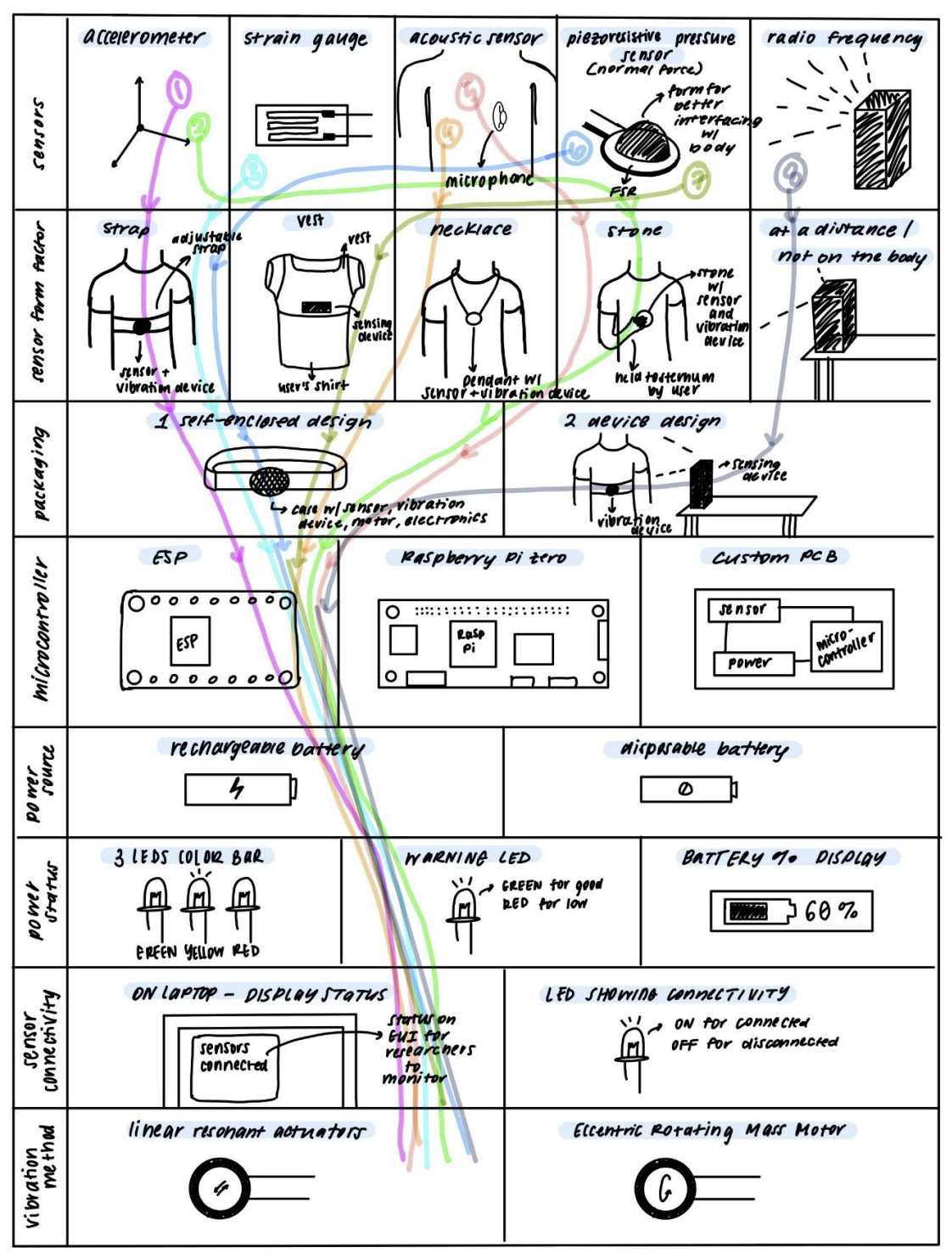
We utilized a Morphological Chart to explore combinations of 5 sensor modalities and various wearable form factors. The Strain Gauge was selected for its superior sensitivity to relative respiratory volume compared to accelerometers.
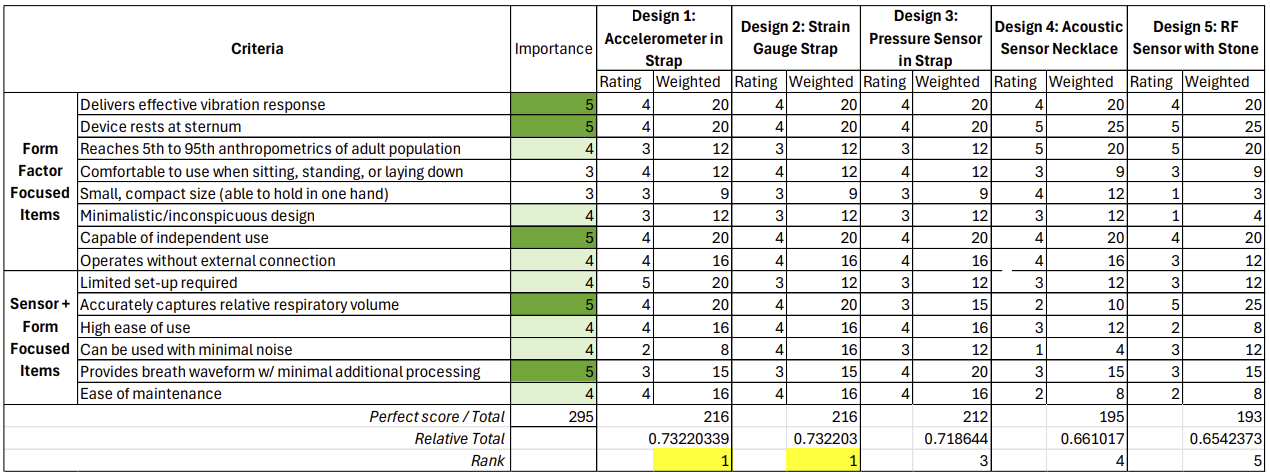
The Racerback Vest was chosen to decoupled the sensing band (xiphoid process) from the vibration source (manubrium), ensuring a consistent ~5N holding force.
Electronics & Prototyping
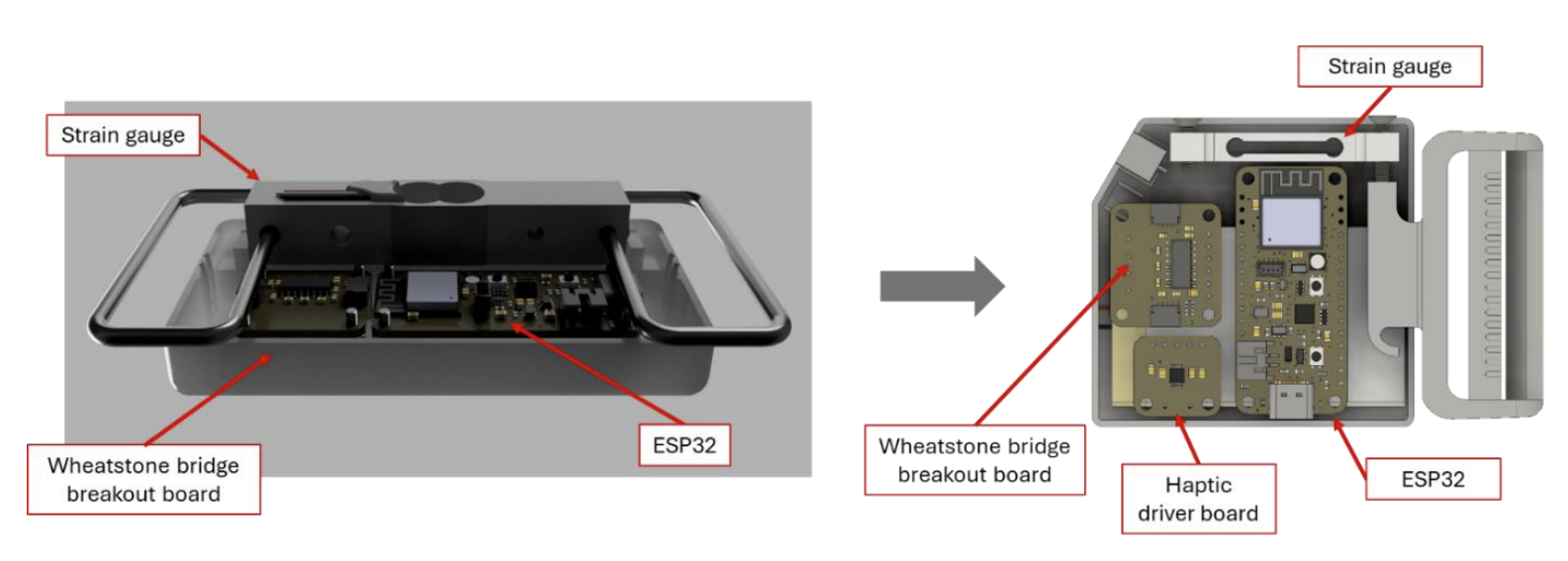
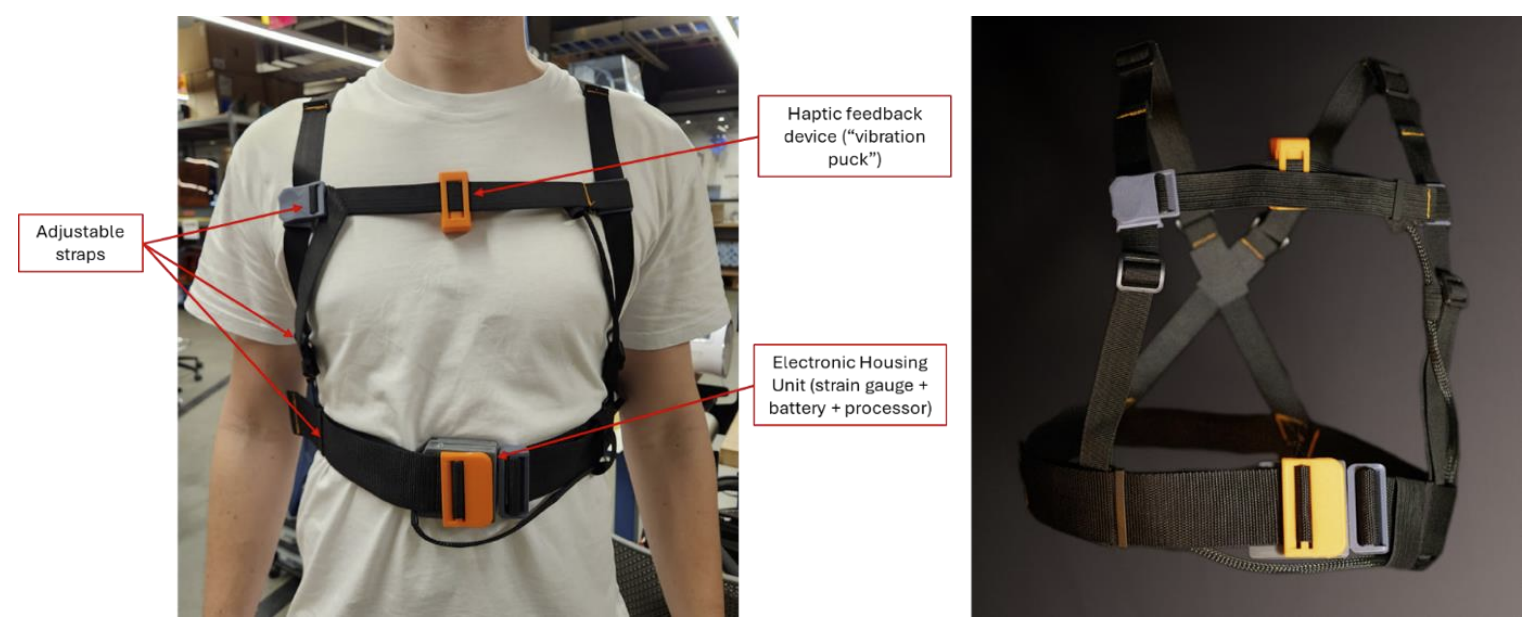
We iterated through multiple housing designs to optimize for compact integration and thermal performance. The final circuit utilizes an ESP32-S3 for processing and a NAU7802 24-bit ADC for high-fidelity signal acquisition.
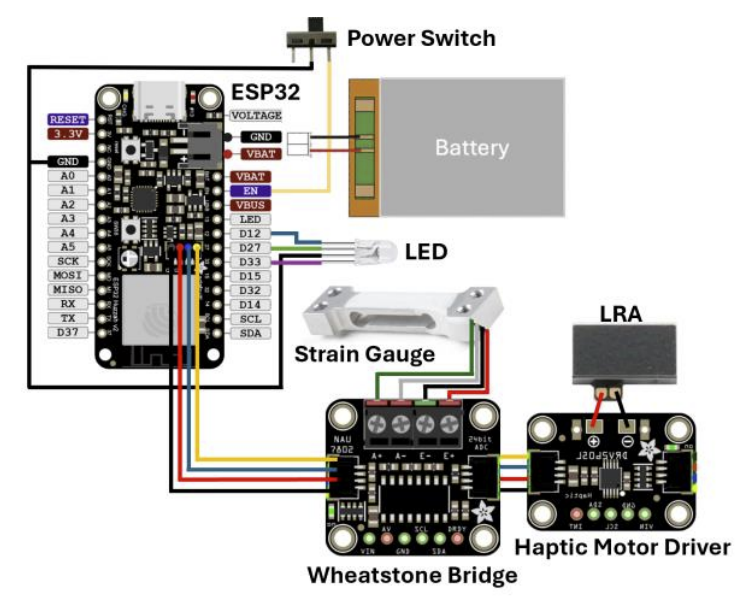
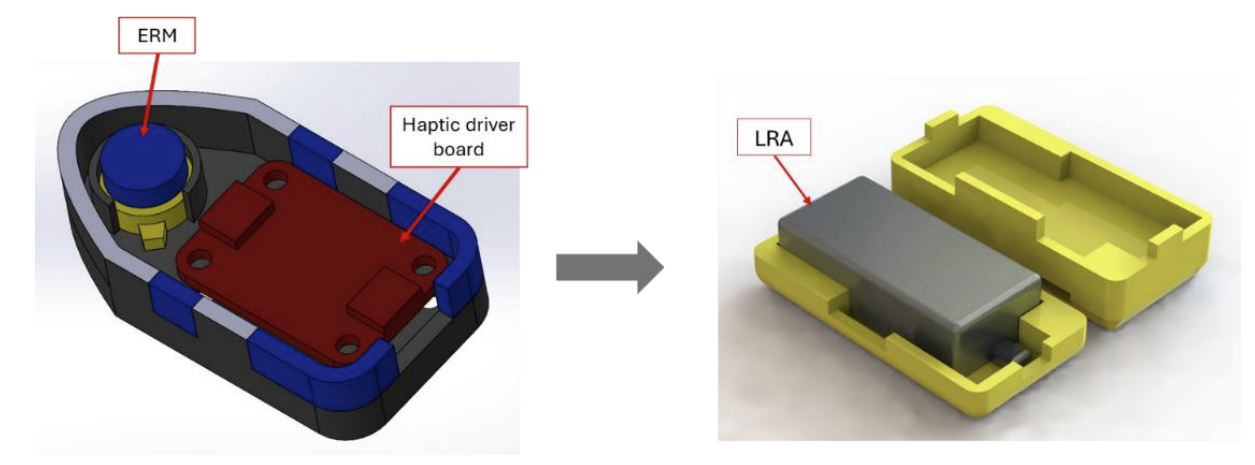
Haptic Evolution: Early prototypes used ERM motors, but they lacked the "organic" rise and fall needed for breath pacing. The team transitioned to a Linear Resonant Actuator (LRA) driven by a TI DRV2605, enabling complex waveforms like "Soft Bump" and "Ramp Up".
Feasibility & Analysis
Structural Integrity
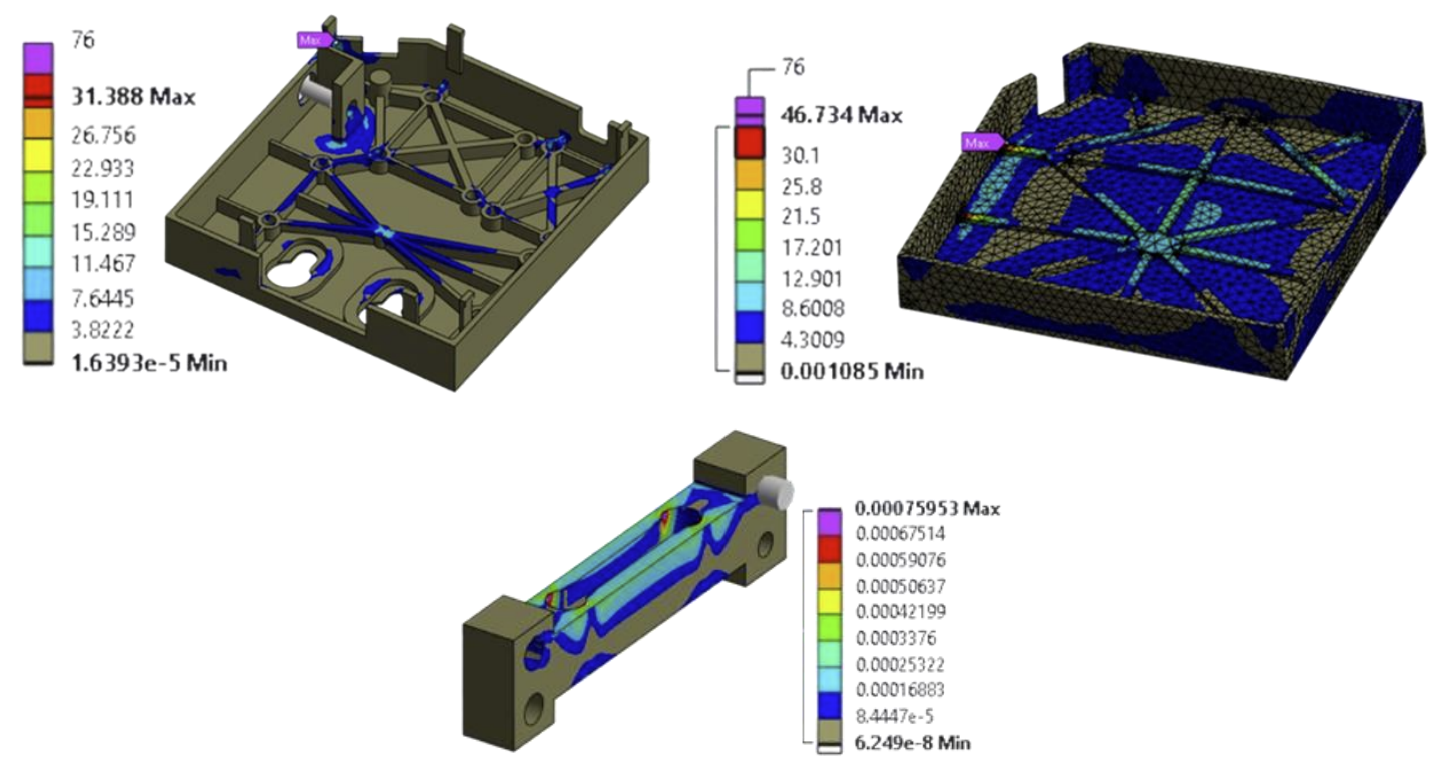
Static FEA simulation (ANSYS) validated the housing against a 25lbf load, yielding a safety factor of 1.5. Destructive testing confirmed failure only at >32lbf.
Thermal Safety
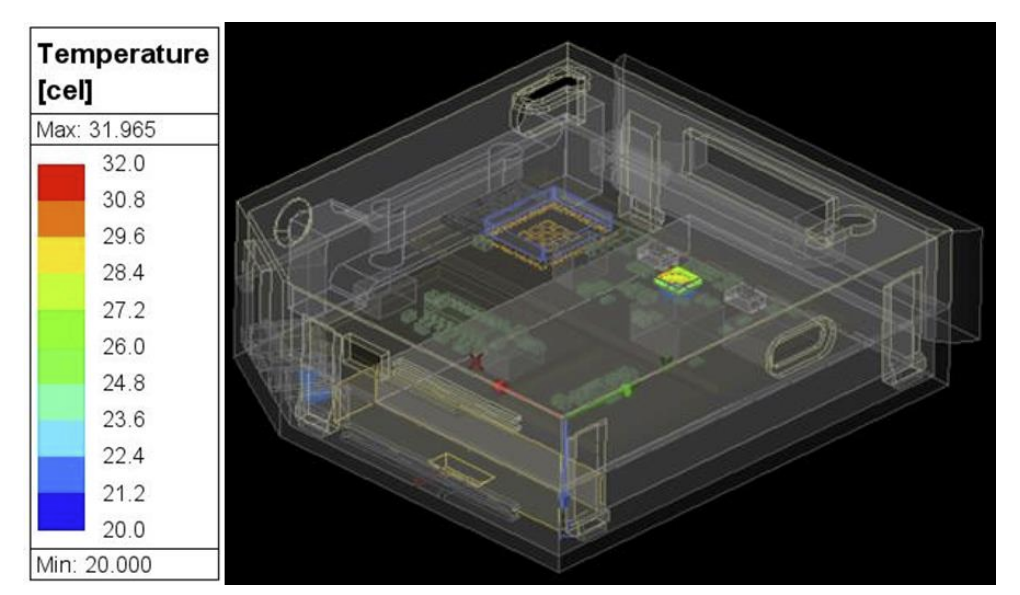
Steady-state thermal analysis ensured the device remains safe for skin contact. The simulation predicted a max surface temp of 32°C, well below the ISO 43°C limit.
Final Design & Validation
The final integrated system features a streamlined user interface, adjustable fit, and robust cable management. Clinical trials (n=10) demonstrated:
- Synchronization: Average latency of 150-350ms, matching human reaction time.
- Comfort: Rated 8.4/10 for extended wear (>30 min).
Performance
- Responsiveness: Achieved a total system latency of <50ms, providing feedback that feels instantaneous and causal to the user.
- Battery Life: Integrated LiPo power management with voltage monitoring on the ESP32 (reading pin A13) to ensure all-day operation, with automatic low-battery indication.